Although this primarily covers the red fox, the grey fox is very similar and can be targeted if they become a nuisance animal*
Red Fox (Vulpes vulpes) inhabit most of North America. The red fox is best identified by its reddish coat, black legs and ears, and long, white-tipped, bushy tail. It has an elongated muzzle, pointed ears, a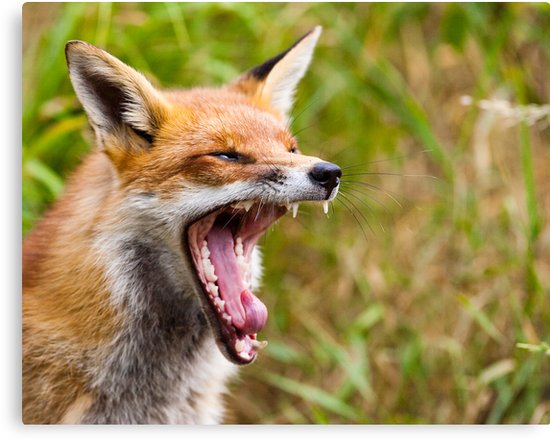 nd a white underside. Red foxes weigh between 7 and 15 pounds, averaging 10 pounds, and measure between 39 and 43 inches long, including the tail.
Red foxes prefer to inhabit a mixture of forest and open fields. They use the transition zone or “edge” between these habitats as hunting areas. Commonly live in close association with human residences and communities. They frequently inhabit yards, parks, and golf courses, farms especially areas that adjoin suitable, undeveloped habitat. The red fox is an omnivore, meaning that it eats both plant and animal foods. Food items include small rodents, squirrels, woodchucks, rabbits, birds and eggs, amphibians, and reptiles. Foxes also will eat vegetation, fruits, nuts, insects, carrion, and garbage.
Problems caused by Foxes
Fox are very smart and as a result many times people have really bad fox problems. Foxes can be a nuisance to gardeners because of fouling, digging or damaging garden plants. They will dig up plants, flower beds or lawns searching for insects and worms or to bury surplus food. This also creates an issue for farmers who suffer crop loss and damage from fox.
Other problems for fox in a urban area is that they mark their territory with unpleasant scent and droppings. They can often be seen raiding waste or compost bins. Problem fox will also make dens in spaces under houses, crawl spaces, under decks, sheds, barns sheds and outbuildings. If no space is available they will burrow under structures to create a den, which aside from being foul smelling they can weaken foundations and threaten structural integrity.
Although it can occur year around, from December to May they are very vocal making make loud ‘screams’ particularly at night and this can bother some people or prompting dogs to bark especially if fox populations are high.
Fox are also a threat to small pets, cats dogs and rabbits are more sustainable than other larger pets but any young animal can become preyed upon by fox..
For the farmer fox are particularly troublesome as they can prey upon domestic animals such as small newly born livestock, and fowl such as ducks, chickens, rabbits, and young lambs, and possible even larger livestock such as a birthing mother. Because of this its important to remove problem fox as soon as possible
Diseases Carried By Nuisance Fox
Fox carry disease organisms which can be a threat to man and domestic animals alike. Some of the several contagious diseases they carry are mange, distemper, rabies and other diseases.
Sarcoptic Mange – Aminals catch this disease from the the Sarcoptic mite (Sarcoptes scabeii) and it can causes mange in foxes, dogs, squirrels, hedgehogs If dogs come into contact with mange they need to be treated at the vets.
Toxoplasmosis – Foxes can get toxoplasmosis the disease can be found in almost all warm blooded birds and animals, but the only animal that Toxoplasmosis oocysts (A cyst containing a cell) can reproduce is the domestic cat. because of this it is important to protect cats from exposure to any fox.